
Downsizing Cost Savings: King Math
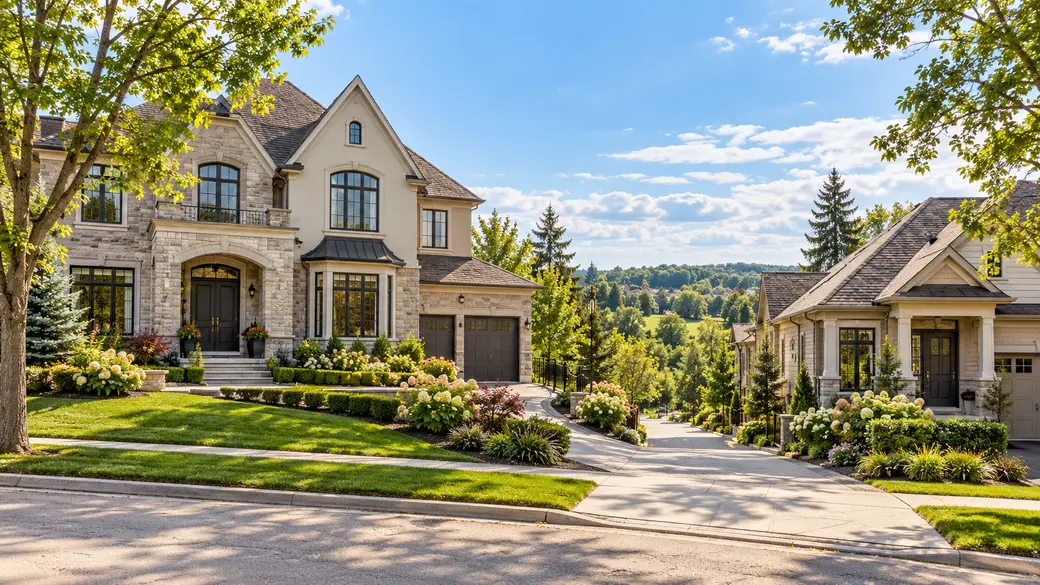
Downsizing can change a household's finances in several ways, but the real savings depend on local market conditions. In King Township, the strongest plans compare net sale proceeds with the full cost of a smaller replacement home, including Ontario land transfer tax, legal expenses, mortgage balance, property taxes, maintenance, and condominium fees. This guide breaks down the local math so you can judge whether a move makes financial sense.
The King Downsizing Snapshot
The most meaningful King downsizing snapshot is property-specific because the Township of King includes distinct housing types, from larger Freeholds to condominium apartments and townhomes. A reliable comparison starts with four figures:
- Expected net proceeds after the existing mortgage, selling expenses, moving costs, and legal fees
- Purchase cost of the replacement home, including Ontario land transfer tax and closing costs
- Ongoing monthly carrying costs for each property
- Cash remaining after the sale and purchase are complete
In King Township, the difference between a detached home and a smaller condo or townhome can be substantial, but condominium fees, property taxes, financing terms, and required updates can narrow the apparent savings. Use current comparable sales, the actual property-tax bill, insurance quotes, and condominium documents for the specific homes under consideration.
What Downsizing Means Financially in King
Downsizing cost savings in King begin with equity released after selling a larger home, rather than simply the difference between two list prices. Start with the expected sale price, then deduct the outstanding mortgage, legal costs, moving expenses, home preparation, and any financing discharge costs. What remains is the cash available for the next purchase.
That equity can reduce the amount borrowed for a smaller detached home, Freehold townhome, condominium townhome, or condo apartment. For many owners, the largest recurring saving comes from carrying a smaller mortgage or eliminating it altogether. Lower utility use, insurance premiums, property taxes, landscaping requirements, and seasonal upkeep may also improve monthly cash flow.
A practical King worksheet compares two full ownership budgets:
- Expected sale price less mortgage payout and transaction costs = net cash available
- Replacement-home price plus Ontario land transfer tax and legal costs = total purchase requirement
- New mortgage payment plus taxes, insurance, utilities, maintenance, and condominium fees = new monthly carrying cost
- Current monthly carrying cost less new monthly carrying cost = estimated monthly change
Condominiums can reduce exterior work, snow removal responsibilities, and yard maintenance, although their monthly condominium fees must remain part of the calculation. A smaller Freehold may avoid those fees while retaining more maintenance responsibility. A current home-value estimate can help organize the assumptions before a move is finalized.
Downsizing Cost Comparison: Larger Home vs Smaller Home in King
A King downsizing comparison should reflect the two actual properties involved, not a generic average. Canadian mortgages are generally structured around mortgage terms and amortization periods, so the payment estimate should match the homeowner's available rate, down payment, amortization, and remaining borrowing needs.
For the larger home, calculate expected net sale proceeds after mortgage payout, legal services, preparation, moving, and any discharge costs. For the smaller home, include the purchase price, Ontario land transfer tax, legal fees, financing, annual property taxes, insurance, utilities, maintenance reserves, and condominium fees where applicable.
The central question is whether the replacement property leaves more cash available while reducing the complete monthly carrying cost. Test different borrowing amounts and down-payment scenarios before comparing the monthly result.
Where the Equity Goes: Common Uses for Downsizing Proceeds
Retirement-income planning: Some homeowners keep released equity as a reserve or incorporate it into a retirement-income plan after receiving appropriate financial advice.
Debt reduction: Applying proceeds to higher-interest debt can lower monthly obligations and create more flexibility in retirement.
A lower-debt replacement home: Using more equity toward the next purchase can reduce, or potentially remove, the need for a new mortgage while leaving room for future expenses.
Investment and income planning: A portion of proceeds may support an investment portfolio based on household goals, risk tolerance, and time horizon.
Lifestyle priorities and tax planning: Travel, recreation, family support, or accessibility improvements may be part of the plan. A qualifying principal residence may be eligible for Canada's principal residence exemption, subject to applicable reporting and designation rules.
Property Tax Relief: What King Downsizers Can Claim
Moving to a lower-assessed replacement home can reduce the property-tax portion of a King household budget, although the result is not always proportional to square footage. Property taxes reflect assessed value, property class, and the combined municipal, regional, and education tax rates. A condo, townhome, and detached Freehold can therefore produce materially different annual bills even when their interior sizes are similar.
King Township collects taxes for the Township, York Region, and school boards. For 2026, about 40% of the bill supports the Township, 43% supports York Region, and 17% supports school boards. The Township's property-tax information confirms that MPAC assessment values and the applicable municipal, regional, and education rates determine the bill. Owners should compare the current tax bill with the actual bill or estimate for the intended replacement property, rather than relying on a broad percentage assumption.
Eligible York Region homeowners may qualify for a property-tax deferral program for low-income seniors or low-income persons with disabilities. The program can defer eligible tax increases, but it is not a permanent exemption. Deferred amounts must generally be repaid when title is sold or transferred, subject to program rules. Eligibility includes income and benefit requirements, so applicants should review the York Region property-tax program and confirm details with King Township before building it into a downsizing plan.
Condominium Fees and Maintenance: The Hidden Line Items
In Ontario, downsizers typically encounter condominium fees when they move into a condo apartment or condominium townhome. These fees can simplify ownership by supporting exterior maintenance, landscaping, snow removal, building insurance, reserve-fund contributions, shared systems, and amenities. However, the inclusions vary by condominium corporation, making the status certificate, operating budget, reserve-fund study, and fee history essential documents.
A smaller Freehold may not have a monthly condominium fee, but maintenance remains the owner's responsibility. Build an annual maintenance reserve that reflects the home's age, condition, roof, mechanical systems, landscaping, and expected capital work. It is a budgeting step, not a fixed King Township charge.
The lower purchase price is not automatically the lower-cost choice. A condo may offer less physical upkeep but higher monthly fees, while a compact Freehold may provide more control with greater responsibility for repairs and seasonal work.
Comparing King Township Communities
King Township can suit downsizers who value a semi-rural setting and York Region services, and its communities do not price alike. 2026 community report for King recorded 29 sales in King City at an average of $2,003,522 (median $1,935,000), 18 sales in Nobleton at an average of $1,687,767 (median $1,783,750), and 8 sales in Schomberg at an average of $1,022,750 (median $1,094,500), all across home types.
Those gaps can matter for a downsizer. A household selling a larger home in one community and buying in another may release more equity than a same-community move, although the replacement home's services, parking, accessibility, and carrying costs still decide the outcome. A useful comparison focuses on the actual homes being considered rather than community-wide averages. Compare purchase price, usable square footage, annual property taxes, condominium fees, parking, accessibility, maintenance needs, and proximity to daily services or GO Transit at King City.
Staying in a familiar community may provide the best lifestyle fit for an owner who wants a quieter setting close to existing connections. A different community within the Township may offer a lower purchase price or a smaller Freehold format. The strongest value is the option that balances the household's cash position, monthly costs, mobility needs, and preferred lifestyle over time.
Types of Smaller Homes in King and What They Cost
King Township downsizers can consider condominium apartments, condominium townhomes, Freehold townhomes, compact detached homes, bungalow-style properties, and smaller homes on manageable lots. Inventory varies by community, condition, parking, accessibility, and the amount of maintenance an owner wants to retain. In September 2026, Market Watch showed an average of $1,195,000 for Freehold townhouses and $512,500 for condo apartments in King, each based on two sales, so current listings and recent comparable sales are the better guide for any specific property.
Condo apartments can offer the most hands-off exterior maintenance and may appeal to owners seeking fewer stairs, less yard work, and easier access to local services. Condominium and Freehold townhomes can provide more living space, parking, and privacy than many apartments while reducing the lot and exterior workload associated with a larger detached home.
Compact detached homes and bungalows preserve Freehold control, outdoor space, and flexibility for households that prefer not to share building systems or common elements. They also retain responsibility for landscaping, snow removal, major repairs, and future capital work.
The steepest potential reduction in purchase price and maintenance demands often comes from moving out of a larger detached property into a well-positioned condo or smaller townhome. That outcome is not automatic: location, condition, parking, accessibility, and condominium-fee obligations can materially affect the overall budget.
Pro-Tip: The biggest financial mistake is treating the difference between two purchase prices as spendable cash. Calculate net proceeds only after mortgage discharge costs, legal fees, moving, home preparation, Ontario land transfer tax, and a contingency reserve are included.
Timing the Sale: When to List Your Larger Home in King
The strongest listing window for a larger King home depends on property type, competing inventory, buyer demand, and the availability of suitable replacement homes. Rather than relying on a fixed seasonal rule, review current new listings, comparable sales, and days-on-market trends for your exact property type and price range. The local market snapshot is a useful reference point.
For downsizers, timing has two connected goals: maximizing the sale outcome and avoiding pressure when purchasing the next home. A detached Freehold can attract a different buyer pool from a condominium, so current competition should be assessed by property type rather than by a single seasonal rule.
Preparation can be as important as timing. Decluttering, repairs, professional staging guidance, accurate pricing, and workable possession dates can influence the sale-and-purchase sequence.
Run the Numbers With a Local Expert
Faye Hutton helps homeowners in King City and across the Township of King calculate equity released, monthly savings, and tax considerations. Call or text +1 (289) 231-4780, or email faye@jj.team, to review the numbers for your current home and intended next move.
Frequently Asked Questions
How much money can I realistically save by downsizing in King?
Your potential savings come from the difference between the complete cost of your current home and that of the replacement property. Include net sale proceeds, remaining mortgage debt, Ontario land transfer tax, legal costs, property taxes, insurance, utilities, maintenance, and condominium fees. The result depends on the two specific properties, not simply on whether the next home is smaller.
Will I owe capital gains tax when I sell my home in King?
A home that qualifies as your principal residence for all relevant years may generally qualify for the principal residence exemption. The sale and designation still need to be reported to the CRA, and different treatment may apply where the property was rented, used for business, or not designated for every year of ownership.
Is it cheaper to buy a condo or a smaller single-family home in King?
A condo can reduce exterior maintenance responsibilities, but its monthly condominium fees need to be included in the budget. A smaller Freehold may have no condo fee while leaving the owner responsible for repairs, landscaping, and seasonal work. Compare the complete carrying cost, not the purchase price alone.
What property tax breaks exist for seniors or retirees who downsize in King?
Eligible York Region homeowners may apply for a property-tax deferral program for low-income seniors and low-income persons with disabilities. It is not a permanent tax exemption, and deferred amounts generally become payable when title is sold or transferred. A lower-assessed replacement home may also lower the annual property-tax bill directly.
How do closing costs affect my net proceeds when downsizing?
Closing costs reduce the equity available for the next home, so they should be calculated before setting a purchase budget. They may include legal services, moving costs, mortgage discharge expenses, property preparation, Ontario land transfer tax, and temporary accommodation where needed. Keeping a contingency reserve can prevent the plan from depending on overly precise estimates.
Recent Posts









"Molly's job is to find and attract mastery-based agents to the office, protect the culture, and make sure everyone is happy! "
GET MORE INFORMATION